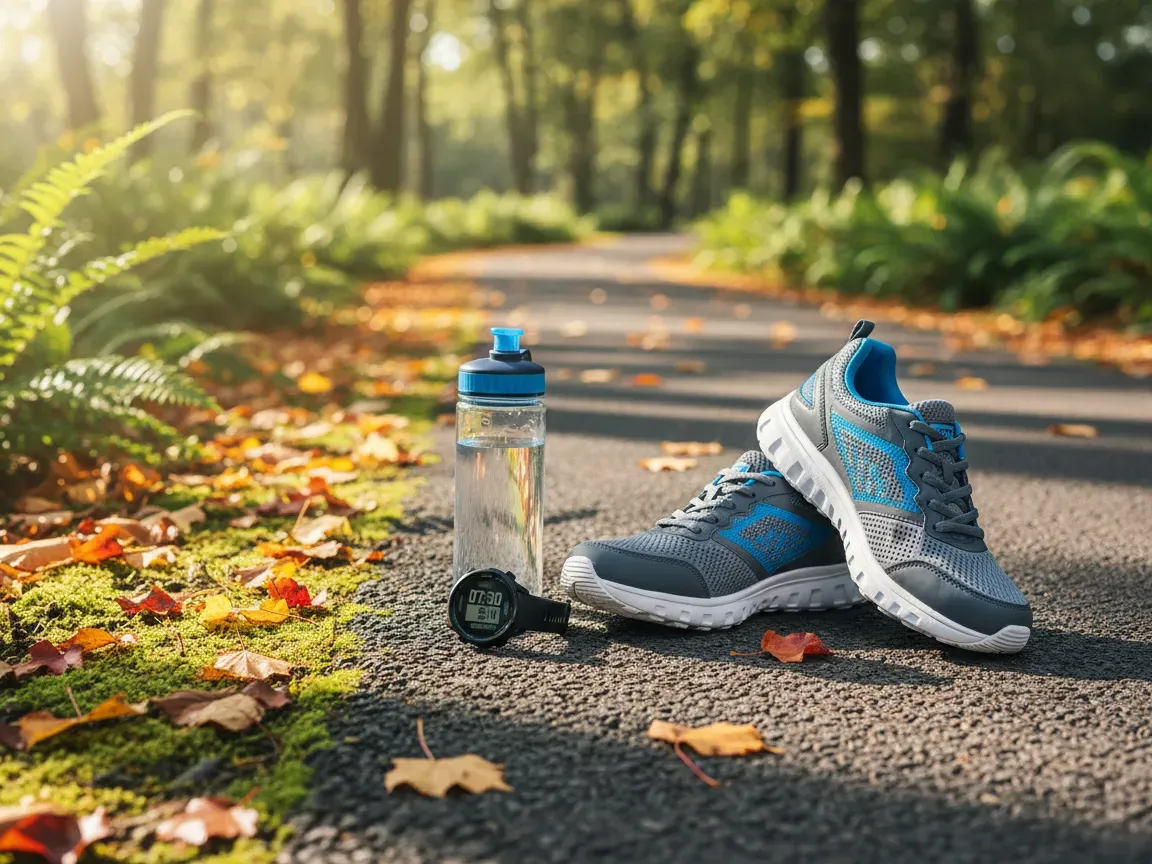

A brisk daily walk does far more than clear your head or burn extra calories. Recent research highlights fast-paced walking as one of the most accessible and effective defenses against age-related bone mineral loss. For women navigating hormonal shifts and natural aging, quickening your stride provides the mechanical stimulation bones require to stay dense, resilient, and fracture-free.
What the Latest Science Reveals About Walking and Bone Density?
Clinical research continues to show that not all steps offer the same physiological benefits. While casual strolling supports cardiovascular baseline health and joint mobility, it fails to produce the force needed to spark new bone growth. Recent data demonstrates that intensity matters far more than total step count when the primary goal is protecting your skeleton.
Studies evaluating postmenopausal populations reveal that participants who consistently engage in brisk walking preserve significantly higher mineral levels in their hips and lumbar spine compared to those who walk at a leisurely pace. The ground reaction forces generated during rapid strides send clear signals to skeletal tissue, dampening the rapid rate of mineral resorption that typically accelerates with age.
How Weight-Bearing Movement Stimulates Bone Remodeling?
Bone is dynamic, living tissue that constantly breaks down and rebuilds in response to mechanical strain. When you walk briskly, your heel strikes the ground with a force equivalent to roughly one and a half to two times your body weight. This impact bends and compresses bone fibers on a microscopic level.
This temporary mechanical distortion activates osteocytes, which are specialized cells embedded within the bone matrix. Once stimulated, these cells direct osteoblasts to deposit fresh calcium and collagen along the lines of stress. Over time, this natural cycle of remodeling reinforces the structural integrity of weight-bearing sites, creating a denser framework that resists fractures and sudden impacts.
Why Aging Women Face Unique Skeletal Risks?
Bone density tends to peak around age thirty, followed by a slow, steady decline. For women, this gradual process often accelerates rapidly during perimenopause and menopause. The primary culprit is the sharp drop in circulating estrogen, a hormone that plays a central role in regulating bone turnover and suppressing excessive mineral breakdown.
Without sufficient estrogen, bone resorbing cells outpace rebuilding cells, leading to porous, brittle structures known as osteopenia or osteoporosis. Because hip and spinal fractures carry life-altering risks for mobility and independence, establishing dynamic, impact-driven physical habits becomes essential before substantial bone thinning takes hold.
How Much Fast-Paced Walking Do You Actually Need?
Achieving tangible skeletal benefits does not require spending hours on a track. The science points toward specific weekly thresholds that deliver measurable protection:
- Aim for at least 150 minutes of moderate-to-vigorous walking distributed across three to five sessions each week.
- Maintain a target speed between 3.5 and 4.2 miles per hour, or roughly 100 to 120 steps per minute.
- Keep sessions continuous for at least 30 minutes to sustain mechanical stress on the hips and lower spine.
- Check your intensity using the talk test; you should be able to speak in brief phrases, but singing should feel impossible.
Easy Ways to Pick Up the Pace in Your Daily Routine
Building speed into your routine does not require an expensive gym membership or complex training programs. A few deliberate tweaks to your ordinary walking habits can immediately increase bone loading:
- Shorten your stride slightly while pushing off forcefully with the balls of your feet to increase turnover naturally.
- Seek out varied terrain, incorporating rolling outdoor hills or moderate treadmill inclines to load bones from differing angles.
- Use structured intervals by alternating three minutes of your fastest walking pace with two minutes of recovery walking.
- Take brisk errands on foot rather than driving short distances, carrying a light backpack to safely add weight-bearing resistance.
Taking the Next Step Toward Lifelong Skeletal Defense
Maintaining resilient bones into your later decades comes down to small, consistent signals delivered to your skeleton week after week. Strolling around the block serves a purpose for relaxation, but purposeful speed is what tells your body to invest in mineral retention. When you treat your walks as structured skeletal training, everyday movement becomes an active investment in your long-term independence.
Lacing up your sneakers and setting an intentional, athletic pace remains one of the simplest self-care choices within your direct control. Your skeleton adapts to whatever demands you place upon it, provided the stimulus is challenging enough to register. By committing to brisk, purposeful movement today, you protect the mobility, strength, and posture that will carry you through every decade ahead.