
Modern interior design thrives on clean geometry, seamless surfaces, and thoughtful architectural layers. While minimalist cabinetry and floating display units create an airy, uncluttered footprint, flat surfaces can occasionally feel sterile or visually static if left in standard overhead illumination. Accent lighting along cabinet edges and shelving has emerged as a definitive detail in contemporary homes, turning functional storage into an expressive focal point. By weaving slender lines of luminescence directly into millwork, you introduce a gentle secondary layer of light that flatters materials, softens sharp transitions, and redefines how a room feels after sunset.
Integrating linear lighting requires an understanding of both aesthetics and installation nuance. Rather than relying on bulky fixtures or harsh downlights, modern designers use discreet LED strips housed in protective channels to wash surfaces with a gentle radiance. This design choice does more than illuminate prized ceramics or everyday kitchenware; it alters the perceived scale of the room, grounding heavy cabinetry while allowing floating elements to genuinely appear as if they hover without effort.
Why edge lighting transforms modern cabinetry?
Cabinetry in contemporary homes often relies on slab doors, handleless profiles, and continuous surfaces that emphasize horizontal or vertical planes. When standard ceiling downlights cast illumination downward, they frequently leave the vertical faces of lower cabinets in shadow, flattening rich textures such as fluted oak, matte lacquer, or brushed metal. Edge lighting directly addresses this imbalance by casting an intentional wash of luminance across those very surfaces.
Adding linear LED accents introduces subtle contrast that highlights architectural craftsmanship. The interplay between soft light and deep shadow accentuates the crisp joins and recessed reveals that define high-end custom millwork. Instead of confronting an expanse of monolithic dark cabinetry, the eye registers layered dimension. This technique proves especially beneficial in open-concept floor plans, where islands and media walls must transition smoothly from daytime task hubs into cozy evening centerpieces.
Beyond visual intrigue, edge illumination significantly enhances safety and usability without overwhelming the space. Low-intensity light tracing the perimeter of base units acts as a natural guide during nighttime trips to the kitchen or living room, eliminating the need to activate jarring overhead fixtures. The result is a refined atmosphere where modern utility blends effortlessly into everyday comfort.
Best placement zones for floating shelves and display units
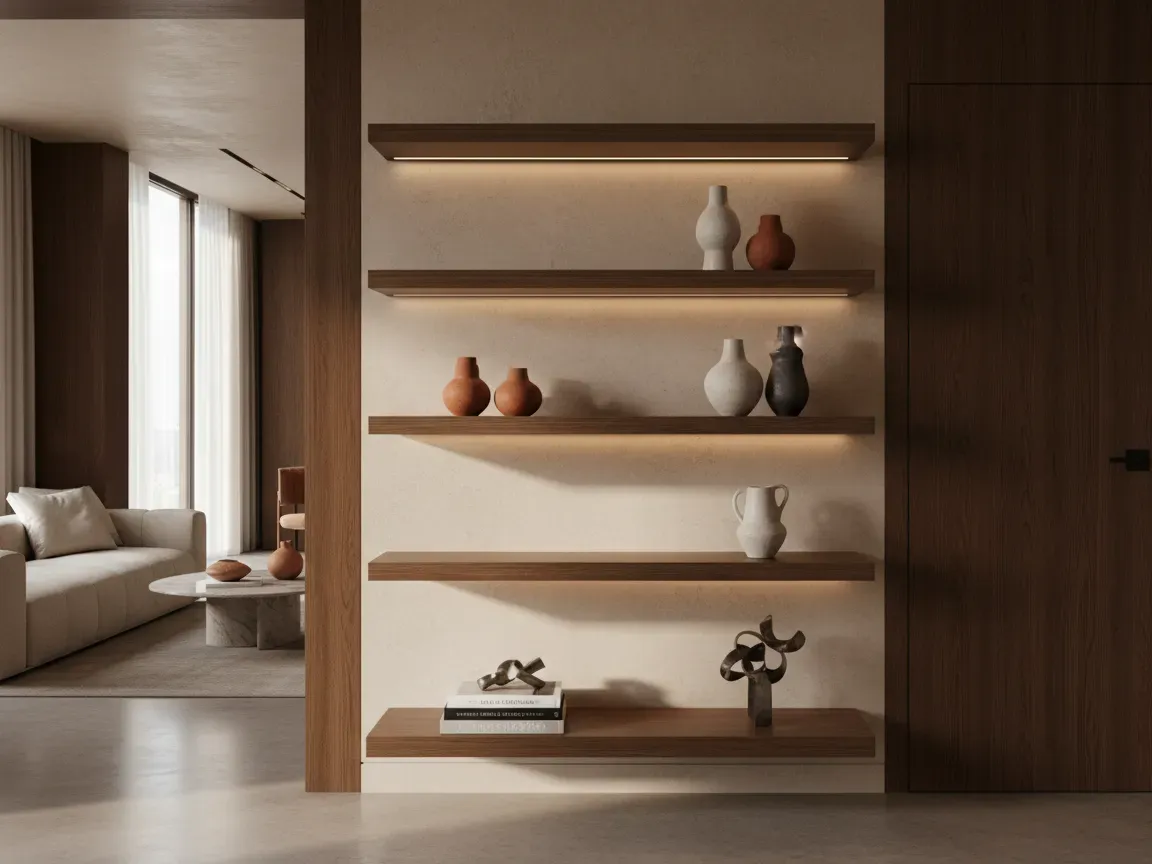
Determining where to position illumination along a shelf or display case dictates whether the final outcome looks refined or amateurish. The primary objective is always to see the resulting glow rather than the bare diodes themselves. For floating open shelves, routing a shallow channel along the underside, positioned approximately one inch from the front lip, casts an even curtain of light downward across the items displayed below. If the lower surface is highly reflective, shifting the channel toward the rear wall creates an alluring backdrop wash that eliminates direct surface glare.
Vertical display cabinets and open credenzas benefit immensely from perimeter illumination. In tall bookcases or glass-front china cabinets, running vertical lines within inner corner reveals provides continuous, shadow-free illumination down through multiple tiers, completely bypassing the frustrating shadows cast by solid intermediate shelves. For inset display niches, installing durable aluminium LED corner profiles ensures the light is directed diagonally at a forty-five-degree angle into the display area rather than shining directly into the viewer’s eyes.
Undercabinet perimeters represent another crucial zone, particularly along the toe-kick or directly beneath upper kitchen cabinets. Mounting strips along the underside of wall cabinets close to the front edge provides uniform task lighting across countertops while creating a floating visual effect for the cabinetry itself. In living rooms, running continuous lighting along the bottom back-edge of floating media consoles visually detaches heavy joinery from baseboards, making compact rooms feel wider and lighter.
Technical details for clean wire management and diffusing
A flawless lighting installation hinges entirely on meticulous hardware selection and concealed wiring. Exposed ribbons, visible adhesive strips, or spotted light patterns instantly undermine modern minimalism. To achieve an unbroken, neon-like beam, pair dense LED tapes with quality frosted or milky diffusers. The diffuser scatters point-source emissions, blending individual diodes into a uniform stream of light that prevents dotted reflections on polished quartz, marble, or high-gloss laminates.
Wire management requires foresight during the initial millwork construction or renovation phase. Low-voltage cables should travel through pre-drilled channels routed into the hidden sides of shelf supports, behind false backs, or within the hollow cores of floating brackets. Keeping drivers accessible yet completely out of view is equally critical. Locating transformers inside accessible soffits, pantry closets, or ventilated utility compartments ensures effortless maintenance while preserving the pristine look of the display surfaces.
Heat dissipation is an often-overlooked technical factor that influences both longevity and safety. High-output tape lights generate ambient heat that degrades adhesive backings and causes individual chips to discolor over time. Rigid metallic channels act as essential heat sinks, drawing thermal energy away from the diodes while maintaining structural alignment across extended horizontal and vertical runs.
How to balance warm color temperatures with room decor?
The color temperature of LED lighting holds tremendous power over the ambiance of a room, directly impacting how wood grains, paint pigments, and upholstery are perceived. A common misstep in residential design is installing cool white lighting that reads as clinical and detached. For interior living spaces, bedrooms, and refined kitchens, color temperatures between 2700K and 3000K provide a welcoming, candle-like warmth that flatters natural timber, brass accents, and earth-toned walls.
When working with ultra-modern palettes composed of cool grays, black steel, and stark white concrete, a neutral 3500K spectrum can deliver crisp definition without tipping into an uninviting blue tint. Paying close attention to the Color Rendering Index (CRI) is just as essential as choosing the correct Kelvin rating. Selecting strips with a CRI of 90 or higher guarantees that your chosen decor, art pieces, and dinnerware showcase their true, rich hues rather than appearing washed out or muddy under artificial illumination.
Integrating variable dimming options or tunable white systems gives homeowners complete control over their living environment across changing daylight hours. Bright, neutral task illumination aids cooking or working throughout late afternoons, whereas dimming the edge profiles down to a low amber glow effortlessly sets a calm, intimate mood for late-night entertaining.
Bringing everyday luxury to modern living spaces
Carefully planned perimeter lighting elevates residential interiors from standard construction to bespoke luxury by treating illumination as an architectural material rather than an afterthought. When lines of gentle radiance trace the perimeter of custom millwork, display niches, and cantilevered shelves, the entire room adopts a sophisticated depth that mirrors high-end boutique hospitality spaces.
Investing in proper channels, seamless diffusers, and warm, dimmable diodes ensures that your accent lighting remains a timeless asset rather than a fleeting design gimmick. By hiding the mechanics and letting the soft, warm wash of light take center stage, you create living environments that feel organized, effortlessly spacious, and deeply comforting throughout every hour of the day.